Let's cut to the chase. Warren Buffett, the legendary investor behind Berkshire Hathaway, is famously skeptical of gold as an investment. He doesn't just dislike it; he has built a coherent, almost philosophical case against it. If you're wondering whether to put your money in gold, understanding Buffett's perspective isn't just academic—it forces you to clarify what you think investing actually is.
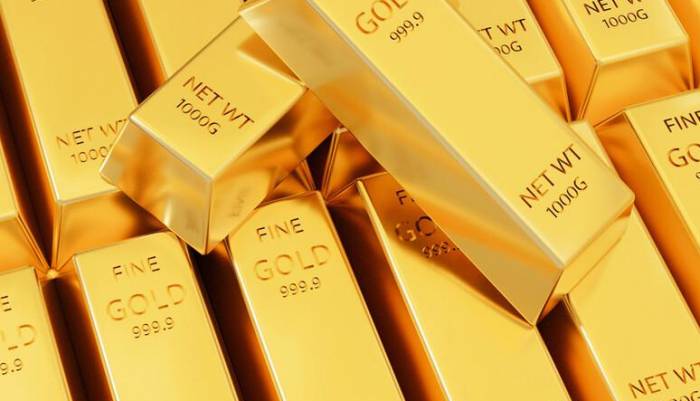
His view isn't a soundbite. It's a core tenet of his value investing philosophy. For Buffett, gold is the ultimate "non-productive" asset. It just sits there. It doesn't produce anything, generate earnings, or innovate. You buy it hoping someone else will pay more for it later. That, to him, is speculation, not investment.
In This Article
Buffett's Most Famous Gold Quotes
You've probably heard snippets. Here are the quotes that define his stance, pulled from his shareholder letters and interviews.
"Gold gets dug out of the ground in Africa, or someplace. Then we melt it down, dig another hole, bury it again and pay people to stand around guarding it. It has no utility. Anyone watching from Mars would be scratching their head."
This is the essence of it. The Martian perspective. All that human effort for an inert lump. I've always found this analogy particularly vivid. It frames gold as a societal activity that, to an outside observer, looks bizarrely circular and unproductive.
Another cornerstone quote is from his 2011 letter to shareholders, right after the last major gold rush post-financial crisis:
"[Gold] is a way of going long on fear, and it has been a pretty good way of going long on fear from time to time. But you really have to hope people become more afraid in a year or two years than they are now. And if they become more afraid you make money, if they become less afraid you lose money, but the gold itself doesn't produce anything."
This cuts to the emotional driver. Buffett positions gold not as an investment in an asset, but as a bet on human psychology—specifically, escalating fear. It's a derivative on emotion.
Deconstructing Buffett's Core Arguments
Buffett's criticism isn't emotional; it's logical and stems from first principles. Let's break down the three pillars of his argument.
1. The "Do-Nothing" Asset
Buffett's universe is divided into productive assets and non-productive assets. Productive assets are things like farms, factories, companies (like Coca-Cola or Apple), and real estate that generates rent. They create value, spin off cash flows, and compound wealth internally.
Gold does none of that. You can't plant seeds in it, it won't brew soda, and it doesn't pay a dividend. Its value 100 years from now will depend entirely on what the next person is willing to pay. Its entire return is based on price appreciation, which is fueled by sentiment and fear. This makes it inherently speculative in his framework.
2. The Transportation Fallacy
Proponents argue gold is a store of value, a way to transport wealth across time. Buffett counters this by asking a more practical question: transport it to what end?
His famous thought experiment goes like this: Imagine you had the choice between owning all the world's gold (melted into a cube roughly 68 feet per side) or owning all of America's farmland plus the entire roster of the world's largest companies (like Exxon, Google, etc.), plus $1 trillion in walking-around money. Which would you choose?
The gold cube would just sit there. The other option—the productive assets—would generate colossal amounts of corn, cotton, oil, technology, and profits every year, forever. The choice is obvious to him. The gold's "store of value" function pales in comparison to the value-creation engine of productive enterprise.
3. Comparing Gold to Productive Assets
Let's make this concrete with a simplified comparison. This isn't about precise returns, but about the nature of the assets.
| Attribute | Gold (The Cube) | A Productive Business (e.g., A Farm) |
|---|---|---|
| Intrinsic Output | None. It is a physical object. | Annual harvest (corn, wheat). Can be sold. |
| Cash Flow | Negative (storage, insurance costs). | Positive (revenue from crop sales). |
| Value Driver | Future sentiment, fear, dollar weakness. | Productivity, management, market demand for its output. |
| Action Required | Hope someone pays more later. | Can reinvest profits to buy more land/equipment. |
| Buffett's Verdict | Speculation. | Investment. |
This table highlights the chasm in thinking. For Buffett, an investment is something you can analyze based on its fundamental ability to generate returns. Gold fails that test.
The Infamous Cube Comparison in Modern Terms
Let's update the cube thought experiment for today. The total above-ground gold stock is worth roughly $15 trillion. For that same amount, you could theoretically buy:
- A significant chunk of the S&P 500's most profitable companies.
- Vast tracts of productive agricultural land across multiple continents.
- And still have billions left over for other ventures.
The gold would just... be gold. The alternative basket would be employing millions, feeding nations, developing software, and paying growing dividends. The societal utility argument is central for Buffett, not just the financial one. He views capital as having a responsibility to be deployed usefully.
Does Gold Have a Role in a Modern Portfolio?
Here's where a pure Buffett disciple and a modern portfolio theorist might diverge. Buffett speaks from the perspective of a capital allocator seeking productive compounders. But what about the individual investor worried about systemic risks?
Even critics of Buffett's gold view acknowledge a few contexts where it might make sense:
Tail Risk Hedge: In a true black-swan event—hyperinflation, a loss of faith in the financial system, war—gold has historically acted as a haven when other assets correlate downward. It's insurance. Buffett himself buys insurance companies, so the concept isn't alien. The key is sizing: insurance is a small premium, not the main portfolio.
Inflation Hedge (Debatable): Over very long periods, gold has kept pace with inflation. But its track record over decades is choppy. In the 1980s and 1990s, it was a terrible hedge. Since 2000, better. It's unreliable in the short-to-medium term. According to data from the World Gold Council and the U.S. Federal Reserve, the relationship is inconsistent.
Portfolio Diversifier: Sometimes, it moves independently of stocks. This low/negative correlation can smooth returns. But this isn't a guaranteed property—sometimes it fails just when you need it.
The practical takeaway? If you own gold, view it like Buffett views his cash pile: not as a growth engine, but as a strategic reserve for extreme scenarios or for optionality. It should probably be a single-digit percentage of your net worth, if that. Making it a core holding is a direct bet against Buffett's worldview.
Common Misconceptions and Nuances
Buffett's position is often oversimplified. Let's clarify.
Misconception 1: Buffett hates all commodities. Not exactly. He has criticized gold and silver specifically for their non-productivity. He has, however, invested in productive commodity-linked businesses, like petroleum services or mining companies themselves (e.g., his past stake in Barrick Gold). Why? Because a gold mining company is a business. It has managers, costs, and can be run well or poorly. It can produce earnings. That makes it analyzable. The metal in the ground is not.
Misconception 2: He thinks gold is worthless. He acknowledges its monetary and ornamental history. His argument is about its efficiency as a modern investment vehicle compared to other choices. He's questioning its opportunity cost.
Misconception 3: His view is outdated in a digital, QE world. Maybe. But his core principle—seek productive assets—has survived every monetary regime. The rise of cryptocurrencies, which he also dismisses as non-productive, only reinforces his consistency. The debate isn't about fiat vs. gold; it's about productivity vs. non-productivity.
A nuanced point often missed: Buffett's framework assumes a functioning, growing society and economy. In that world, productive assets win. Gold is a hedge for when you're less confident in that premise. Your allocation to gold, therefore, is a direct reflection of your confidence in societal stability and progress.
Your Gold Investment Questions Answered
So, what did Warren Buffett say about gold? He said it's a non-productive asset that represents a bet on fear. More importantly, he provided a lens to judge all investments: does this thing create value on its own, or am I relying on the greater fool to take it off my hands?
You don't have to agree with him. Many don't. But before you buy that coin or ETF share, you should grapple with his question. Are you investing, or are you insuring against a fear? Being honest about that answer is the real value of understanding Buffett's critique.

Comments (0)
Leave a Comment